
What Type of Clothes Are Best for Kids?
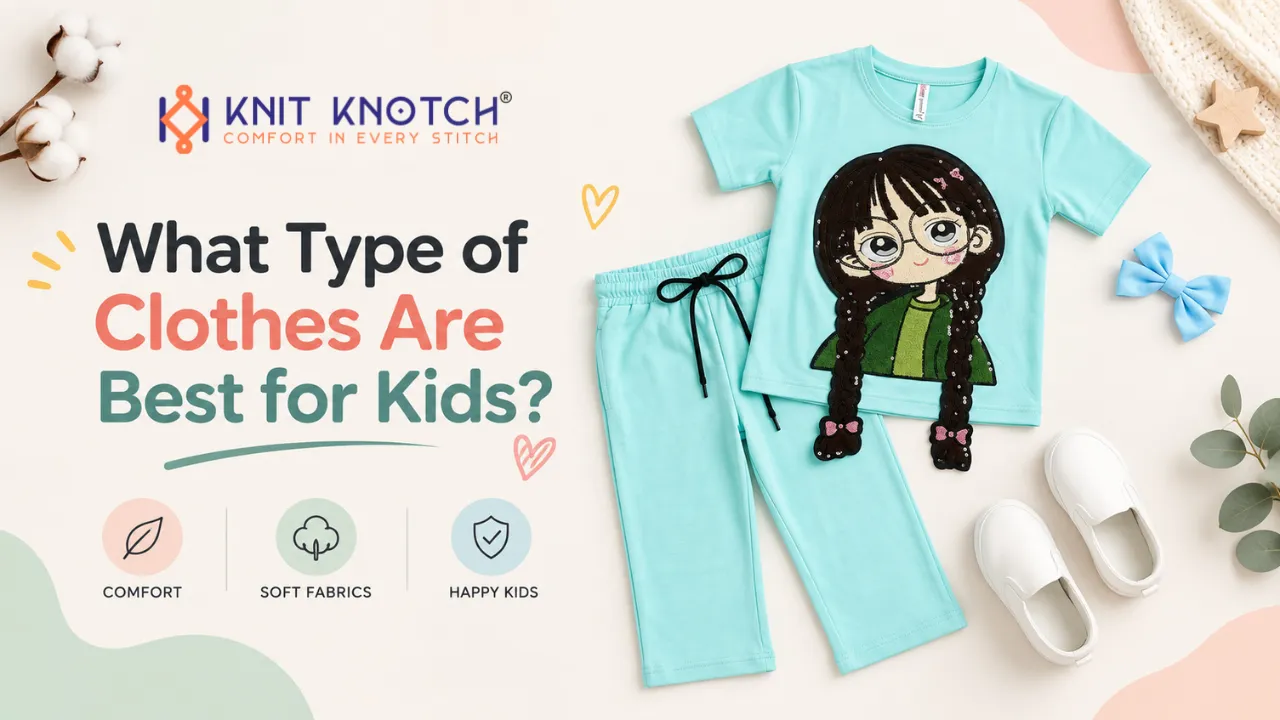
A practical guide for parents on choosing comfortable kids clothes by fabric, fit, weather, activity and age—without sacrificing everyday style.
What Type of Clothes Are Best for Kids?
SEO Keyword Cluster
- Primary: best clothes for kids
- comfortable clothes for kids
- best fabric for kids
- cotton clothes for kids
- kids clothes India
- breathable clothes for kids
- everyday wear for kids
- kids summer clothes
- clothes for sensitive skin kids
- kids co ord sets
- toddler clothes India
- best kidswear in India
- how to choose clothes for kids
- kids wardrobe essentials
01Start With Comfort, Not Just Style
Children need clothes that let them move naturally. Look for a comfortable neckline, enough room through the shoulders and hips, a waistband that stays in place without digging in, and seams that do not feel rough against the skin.
02What Is the Best Fabric for Kids?
There is no single fabric that is best for every child, climate and activity. For everyday clothing in warm conditions, cotton is a practical and widely used option. Fabric weight, weave, construction and fit also influence comfort.
For children with eczema, dermatologists commonly recommend loose-fitting 100% cotton clothing and note that wool and some synthetic fibres can irritate sensitive skin.
03Choose Clothes That Allow Free Movement
Kids squat, jump, crawl, run and stretch. Relaxed T-shirts, comfortable lowers, shorts and well-fitted co-ord sets can make useful everyday options. Loose-fitting does not mean excessively oversized—sleeves and hems should not interfere with play.
04Best Clothes for Kids in Summer
For hot Indian weather, prioritise lightweight, breathable clothing and avoid unnecessary layering. Cotton T-shirts, shorts, relaxed-fit lowers, light dresses and comfortable co-ord sets are practical options. For eczema-prone children, overheating and sweat can also aggravate symptoms.
05Best Clothes for Kids in Winter
Winter dressing works well in layers. Start with a comfortable base layer and add warmth as needed. Layers can be removed when a child moves indoors or gets warm during active play. Rough wool directly against sensitive skin may be irritating for some children.
06What About Monsoon Clothing?
During humid or rainy weather, prioritise comfortable clothes that are easy to change. Avoid leaving children in damp garments for long periods after outdoor play and keep a dry change available when practical.
07Are Co-ord Sets Good for Kids?
Co-ord sets can simplify everyday dressing because the top and bottom already work together, while many separates can also be mixed with wardrobe basics. Explore boys' co-ord sets, girls' co-ord sets and toddler co-ord sets, checking each product page for its actual fabric and sizing.
08Choose Clothes for the Activity
| Activity | Practical Choice | Priority |
|---|---|---|
| Everyday play | T-shirt + shorts/lower or co-ord | Movement |
| School | Simple comfortable separates | Easy dressing |
| Travel | Relaxed co-ord or tee + lower | Comfort |
| Summer | Lightweight breathable clothing | Weather suitability |
| Winter | Comfortable layers | Adjustable warmth |
| Occasion | Comfortable festive outfit | Non-restrictive fit |
09For Sensitive or Eczema-Prone Skin
Friction, heat, sweat, seams, tags and certain fabrics can bother eczema-prone skin. Dermatologists recommend loose-fitting cotton clothing for many children with eczema, removing irritating tags and washing new clothes before wear. Individual triggers differ, so follow your child's dermatologist when eczema is persistent.
10Do Not Forget Clothing Safety
For younger children, check for long cords and loose accessories. Drawstrings around children's hoods and neck areas can create entanglement or strangulation hazards. Choose age-appropriate garments and follow applicable product safety guidance.
11Should You Buy One Size Bigger?
Buying dramatically oversized clothing for future growth can compromise movement. Use the brand's measurements and allow sensible room for growth without excessively long sleeves, dragging hems or unstable waistbands.
12The 7-Point Kidswear Buying Check
- Fabric: Is the composition clearly stated?
- Fit: Can your child sit, bend and run?
- Weather: Does it suit the temperature?
- Skin comfort: Any rough tags or seams?
- Practicality: Is it easy to wear and wash?
- Safety: Are cords and accessories age-appropriate?
- Versatility: Can it mix with existing clothes?
Frequently Asked Questions
Soft, comfortable, properly fitting clothes that suit the weather and allow free movement are strong everyday choices.
No fabric is universally best. Cotton is practical for many everyday and warm-weather uses; 100% cotton is commonly recommended for eczema-prone children.
Cotton can be soft and breathable. Always check the actual fabric composition because garments may contain different fibres or blends.
Choose lightweight, breathable and comfortable T-shirts, shorts, relaxed bottoms, dresses or suitable co-ord sets, while avoiding unnecessary layers.
They can be practical and comfortable when the fabric, fit and construction suit the child and activity.
Use the brand's measurements rather than relying only on age labels, and allow enough room for movement without excessive oversizing.
Comfort First. Style Naturally.
A smart kids' wardrobe starts with comfortable, versatile pieces suited to your child's weather, movement and everyday routine.
Explore KnitKnotch Kidswear