What Fabric Is Best for Sensitive Baby Skin?
A fabric-comparison guide for delicate/eczema-prone baby skin. Leads with why baby skin is more reactive, a comparison table (cotton, muslin, organic cotton, bamboo), what to avoid, the seam/label/dye details, a section for eczema-prone skin, and a medical disclaimer. FAQs target best fabric for sensitive baby skin, bamboo vs cotton, fabrics to avoid. Article + Breadcrumb + FAQPage schema.
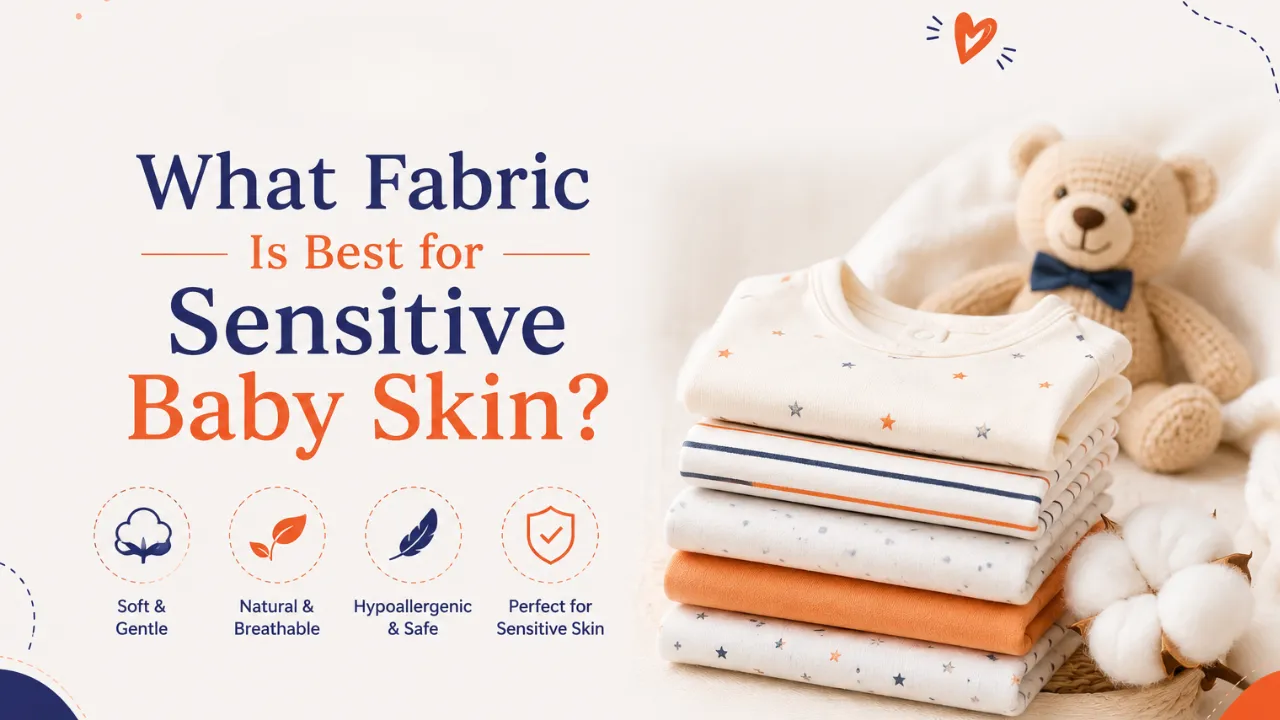
What Fabric Is Best for Sensitive Baby Skin?
A baby's skin is thinner and far more reactive than ours, so the fabric touching it all day really matters. Here's what's gentlest, what to avoid, and how to dress sensitive skin without the rashes.
01 Why baby skin needs gentler fabric
A baby's skin is thinner, more delicate and more permeable than an adult's. It loses moisture faster, reacts to irritants more quickly, and hasn't yet built up the resilience that grown-up skin has. So a fabric that feels merely a bit rough to you can leave a baby red and uncomfortable. What sits against that skin for hours at a stretch is worth getting right.
02 The best fabrics for sensitive skin
A handful of natural fibres do the job beautifully. Here's how the gentle options compare.
| Fabric | Why it suits sensitive skin |
|---|---|
| 100% Cotton | The all-rounder. Soft, breathable, absorbs moisture, rarely irritates, and easy to wash. The safest everyday choice. |
| Muslin cotton | A loose, light cotton weave that's extra airy and gentle. Lovely for swaddles and warm weather. |
| Organic cotton | Grown with fewer chemicals, so even less residue against the skin. A good pick for very reactive skin. |
| Bamboo | Very soft and moisture-wicking, though often less durable. A comfortable option if you don't mind gentler care. |
If you want one rule to remember, it's this: for a baby, a soft cotton against the skin is rarely the wrong answer.
03 The fabrics to avoid
Some materials work against sensitive skin no matter how cute the garment looks.
Skip polyester, nylon and synthetic blends, which trap heat and sweat against the skin and can trigger rashes in humid weather. Be cautious with untreated wool, which often feels scratchy. And watch for the small offenders: stiff seams, scratchy care labels and heavily dyed fabrics.
04 It's not only the fabric
Even the right material can irritate if the details are wrong. Turn a garment inside out and feel the seams. Look at where the labels sit, since a stiff tag at the back of the neck rubs all day. And give new clothes a wash before the first wear to rinse out any manufacturing residue and dye.
Washing matters too
Use a mild, fragrance-free detergent for baby clothes, skip the fabric softener, which can leave a coating that irritates, and rinse well. Sun-drying is a gentle natural finish that also helps keep things fresh.
05 If your baby has eczema or very reactive skin
For eczema-prone skin, the same rules apply but matter even more: soft 100% cotton, loose fits that don't rub, smooth seams, and gentle washing. Heat and sweat tend to make flare-ups worse, so breathable fabric and not over-layering both help. If your baby's skin is persistently red, itchy, broken or distressing them, do speak to your paediatrician, as some skin conditions need proper treatment alongside the right clothing.
Sensitive-skin clothing checklist
- Choose soft 100% cotton as your default for everyday wear.
- Avoid synthetics and untreated wool against the skin.
- Check seams and labels for anything stiff or scratchy.
- Wash new clothes before first wear with a mild, fragrance-free detergent.
- Skip fabric softener and keep fits loose and breathable.
Frequently asked questions
This article is general information, not medical advice. KnitKnotch is a children's clothing brand, not a medical provider. For persistent skin issues, please consult a qualified paediatrician or dermatologist.
Gentle on the softest skin
KnitKnotch makes soft, breathable cotton co-ord sets and everyday wear for babies, toddlers and kids — comfortable against delicate skin and made for Indian weather. Most of it under Rs500.
Shop the Collection